
21
Who was the British Prime Minister when India gained independence in 1947?
- A.Ramsay MacDonald
- B.Anthony Eden
- C.Clement Attlee
- D.Winston Churchill
Solution
Independence and British PM
Correct option: (c) Clement Attlee.
Clement Attlee of the Labour Party was Prime Minister of the United Kingdom from 1945 to 1951, and it was his government that carried the Indian Independence Act, 1947 through the British Parliament.
On 20 February 1947 he announced in the House of Commons that Britain would transfer power in India by June 1948, and he sent Lord Mountbatten as the last Viceroy to complete the process, which was finished early, on 15 August 1947.
Winston Churchill is the tempting choice because he is the famous wartime Prime Minister and the loudest opponent of Indian freedom, but he lost the July 1945 general election to Attlee and returned to office only in 1951 - well after independence.
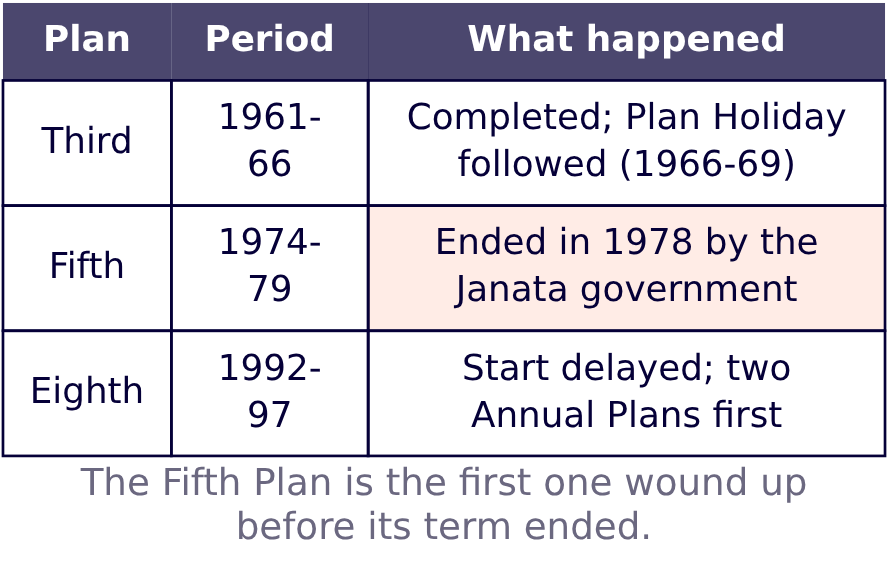 When the Janata Party came to power, the Morarji Desai government terminated the plan in 1978, a year ahead of schedule, and replaced it with a 'rolling plan' - which makes the Fifth Plan the first plan ever to be cut short.
The Third Plan (1961-66) is the trap: it ran its full term and it was only afterwards that three Annual Plans - the 'Plan Holiday' of 1966-69 - had to be used because of the wars and the drought. That was a gap after a plan, not a plan ended midway.
When the Janata Party came to power, the Morarji Desai government terminated the plan in 1978, a year ahead of schedule, and replaced it with a 'rolling plan' - which makes the Fifth Plan the first plan ever to be cut short.
The Third Plan (1961-66) is the trap: it ran its full term and it was only afterwards that three Annual Plans - the 'Plan Holiday' of 1966-69 - had to be used because of the wars and the drought. That was a gap after a plan, not a plan ended midway.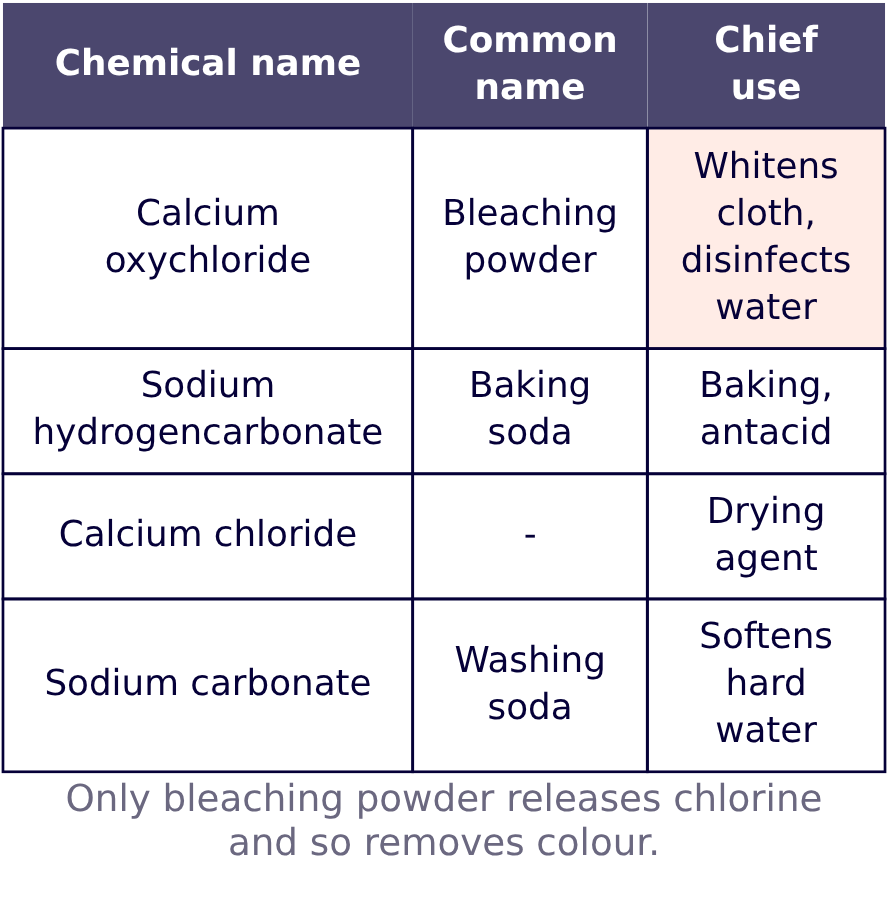 The other three are familiar salts with nothing to do with bleaching: sodium hydrogencarbonate is baking soda, calcium chloride is a drying agent, and sodium carbonate is washing soda used to soften hard water.
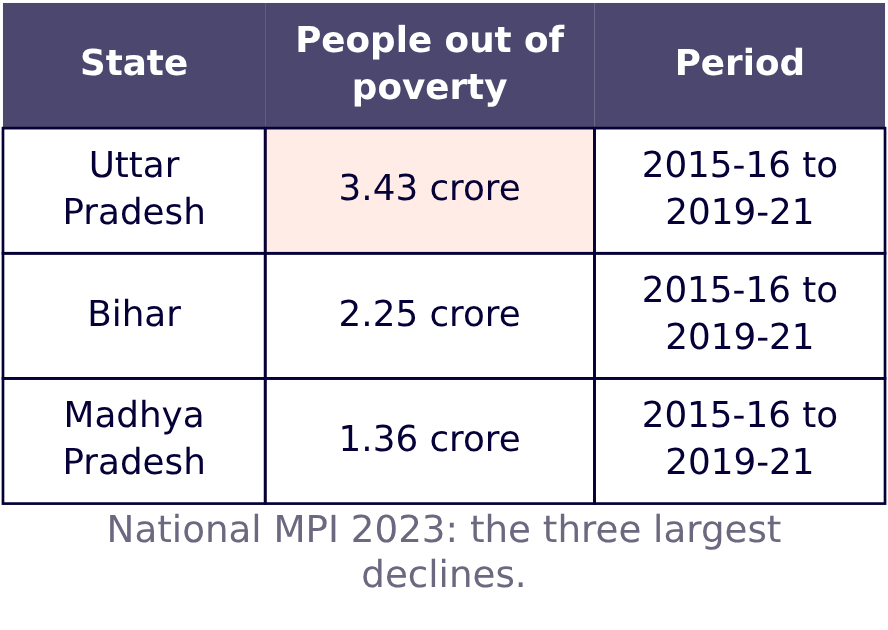 For the country as a whole the headcount ratio fell from 24.85% to 14.96% over the same five years, so roughly 13.5 crore Indians escaped multidimensional poverty.
The index uses the Alkire-Foster method over 12 indicators grouped into three equally weighted dimensions - health, education and standard of living. Karnataka, Haryana and Manipur already had low poverty levels, so a fall of this size was simply not available to them; the biggest drops came from the states that started highest.
For the country as a whole the headcount ratio fell from 24.85% to 14.96% over the same five years, so roughly 13.5 crore Indians escaped multidimensional poverty.
The index uses the Alkire-Foster method over 12 indicators grouped into three equally weighted dimensions - health, education and standard of living. Karnataka, Haryana and Manipur already had low poverty levels, so a fall of this size was simply not available to them; the biggest drops came from the states that started highest.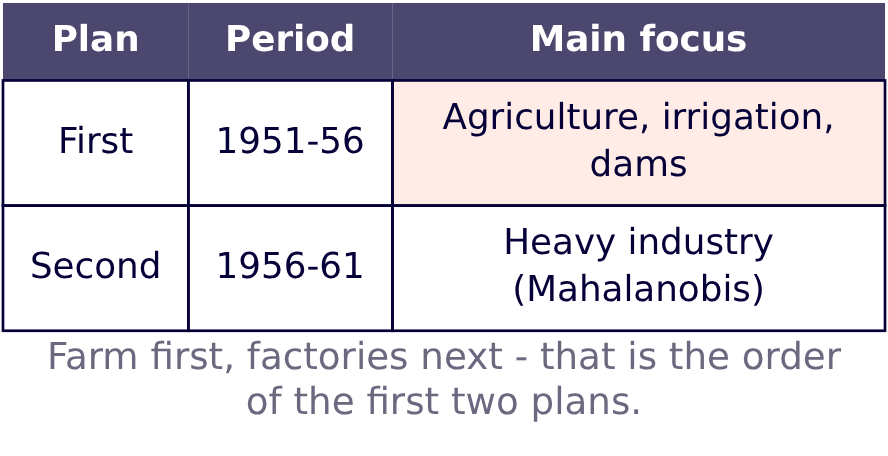 It was based on the Harrod-Domar model, targeted 2.1% growth and comfortably exceeded it at about 3.6% - the widest margin of success any Indian plan has recorded.
Rapid industrialisation and heavy industry are the theme of the Second Plan (1956-61), built on the Mahalanobis model, so those two options simply describe the plan that came next; privatisation was no part of planning at all in that era.
It was based on the Harrod-Domar model, targeted 2.1% growth and comfortably exceeded it at about 3.6% - the widest margin of success any Indian plan has recorded.
Rapid industrialisation and heavy industry are the theme of the Second Plan (1956-61), built on the Mahalanobis model, so those two options simply describe the plan that came next; privatisation was no part of planning at all in that era.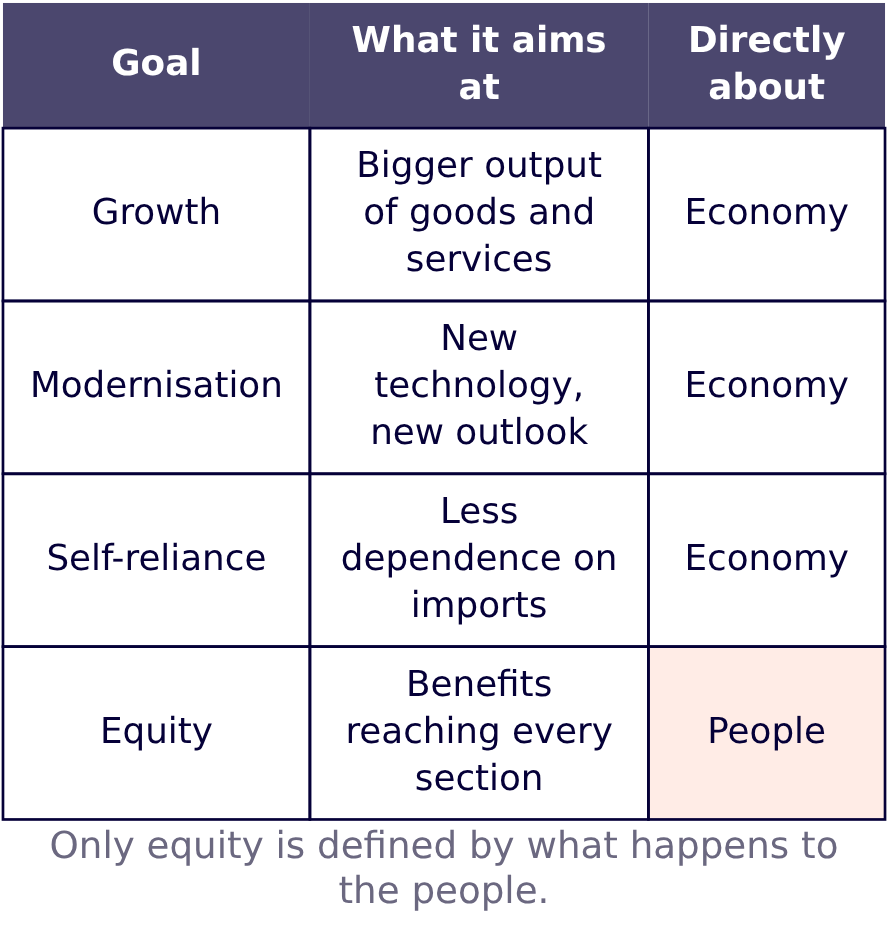 Growth means a larger stock of goods and services, modernisation means new technology and a changed social outlook, and self-reliance means depending less on imports - all three are statements about the economy, while equity is a statement about the citizen.
That is also why a country can post high growth and still fail on the plan's own terms: without equity the extra output simply piles up with those who already have it.
Growth means a larger stock of goods and services, modernisation means new technology and a changed social outlook, and self-reliance means depending less on imports - all three are statements about the economy, while equity is a statement about the citizen.
That is also why a country can post high growth and still fail on the plan's own terms: without equity the extra output simply piles up with those who already have it.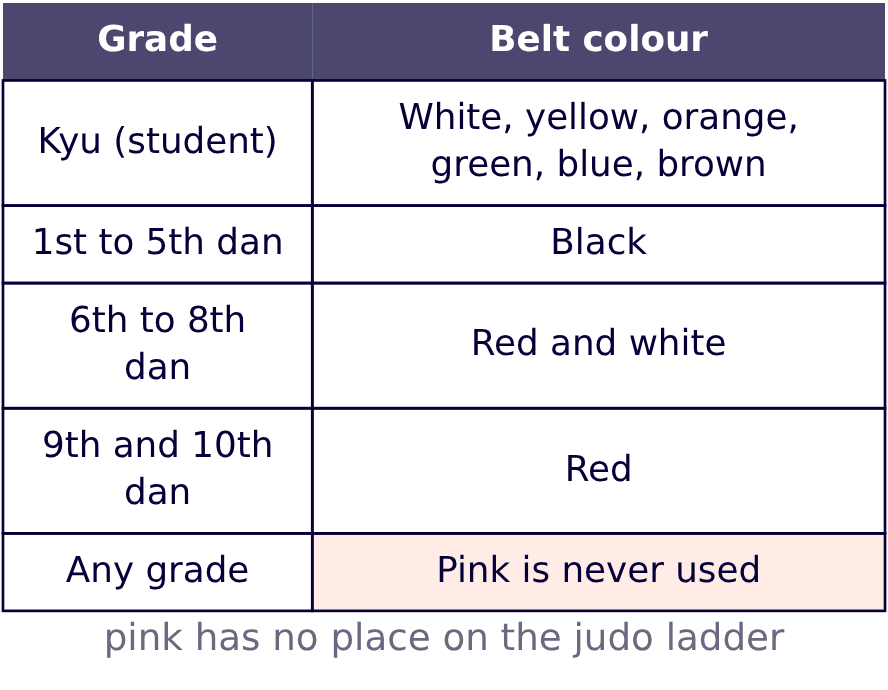 So white, blue and red all sit somewhere on the judo ladder, but pink appears nowhere on it.
Memory hook: judo was founded by Jigoro Kano at the Kodokan, Tokyo, in 1882, and it was Kano who invented the coloured-belt system that other martial arts later copied.
The colour NOT associated with judo grades is therefore Pink, so the correct option is (a).
So white, blue and red all sit somewhere on the judo ladder, but pink appears nowhere on it.
Memory hook: judo was founded by Jigoro Kano at the Kodokan, Tokyo, in 1882, and it was Kano who invented the coloured-belt system that other martial arts later copied.
The colour NOT associated with judo grades is therefore Pink, so the correct option is (a).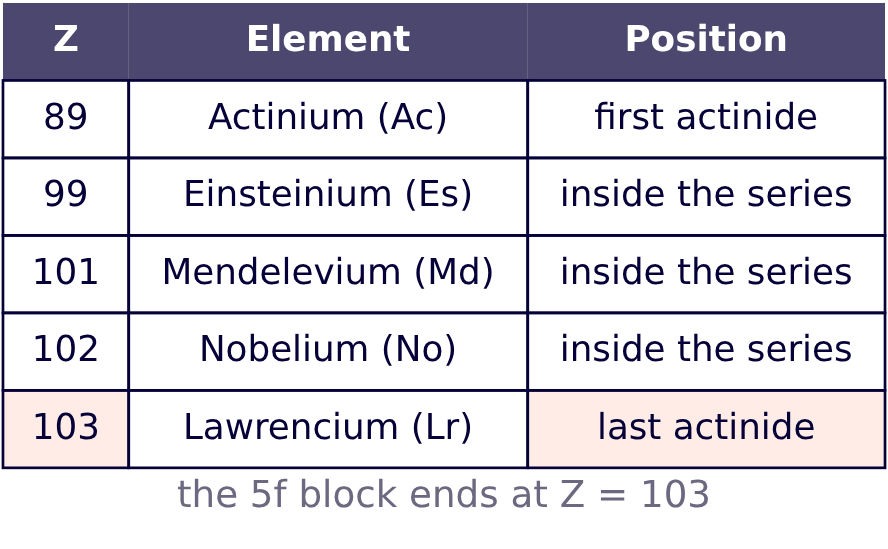 Check the distractors: 99 is einsteinium, 101 is mendelevium and 108 is hassium, which is a period-7 transition metal and not an actinide at all.
Memory hook: the series is bounded by two easy numbers, 89 and 103; lawrencium is named after Ernest O. Lawrence, inventor of the cyclotron, and was first made at Berkeley in 1961.
Hence the correct option is (d).
Check the distractors: 99 is einsteinium, 101 is mendelevium and 108 is hassium, which is a period-7 transition metal and not an actinide at all.
Memory hook: the series is bounded by two easy numbers, 89 and 103; lawrencium is named after Ernest O. Lawrence, inventor of the cyclotron, and was first made at Berkeley in 1961.
Hence the correct option is (d).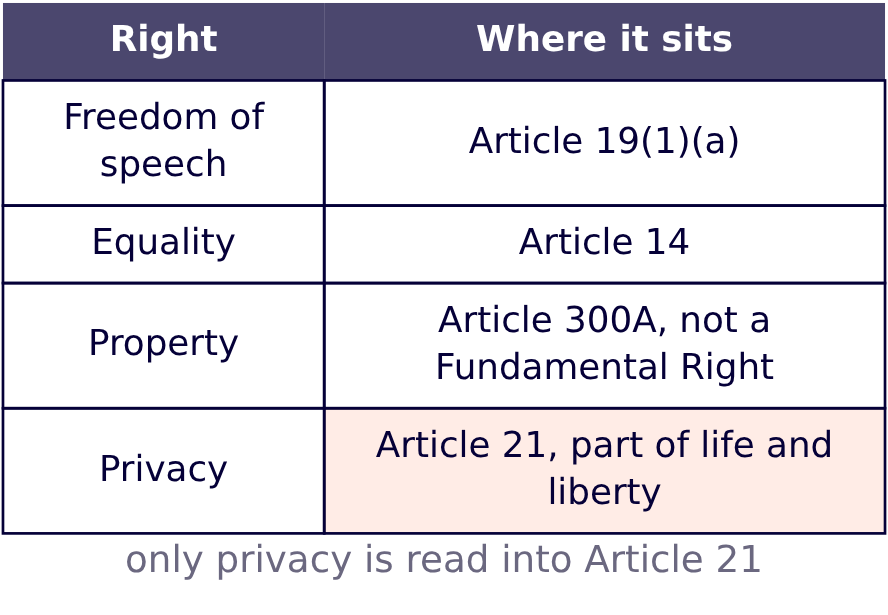 The other three options live elsewhere in the Constitution: free speech under Article 19(1)(a), equality under Article 14, and property, which the 44th Amendment (1978) removed from the Fundamental Rights and left as a mere constitutional right under Article 300A.
Memory hook: Article 21 is the Court's favourite hook - the right to livelihood, to clean air and water, to education and to privacy have all been read into it.
Hence the correct option is (d).
The other three options live elsewhere in the Constitution: free speech under Article 19(1)(a), equality under Article 14, and property, which the 44th Amendment (1978) removed from the Fundamental Rights and left as a mere constitutional right under Article 300A.
Memory hook: Article 21 is the Court's favourite hook - the right to livelihood, to clean air and water, to education and to privacy have all been read into it.
Hence the correct option is (d).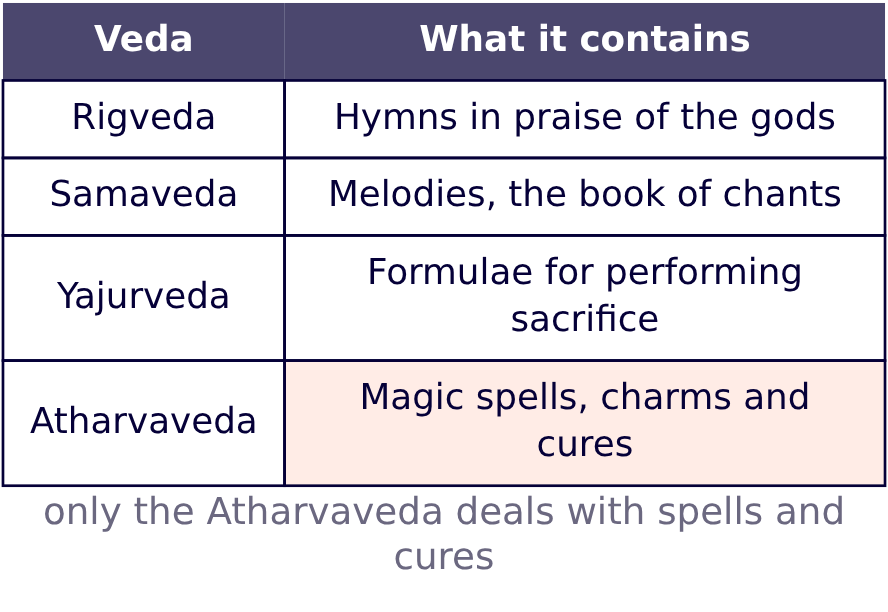 It also carries the Mundaka Upanishad, from which India's national motto 'Satyameva Jayate' is taken.
The other three have plainly different purposes: the Rigveda is hymns of praise, the Samaveda is the book of melodies sung at sacrifices, and the Yajurveda supplies the sacrificial formulae.
Hence the correct option is (b).
It also carries the Mundaka Upanishad, from which India's national motto 'Satyameva Jayate' is taken.
The other three have plainly different purposes: the Rigveda is hymns of praise, the Samaveda is the book of melodies sung at sacrifices, and the Yajurveda supplies the sacrificial formulae.
Hence the correct option is (b).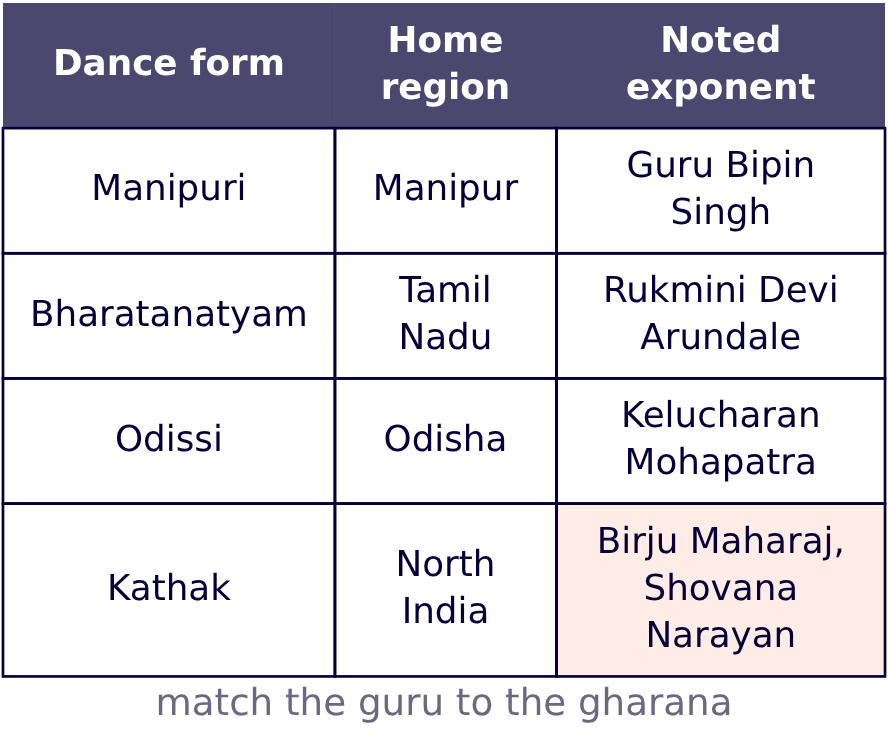 The clue that settles the question is the guru: Birju Maharaj is the name most tightly bound to Kathak, so a dancer described as his disciple can only be a Kathak dancer.
Hence the correct option is (c).
The clue that settles the question is the guru: Birju Maharaj is the name most tightly bound to Kathak, so a dancer described as his disciple can only be a Kathak dancer.
Hence the correct option is (c).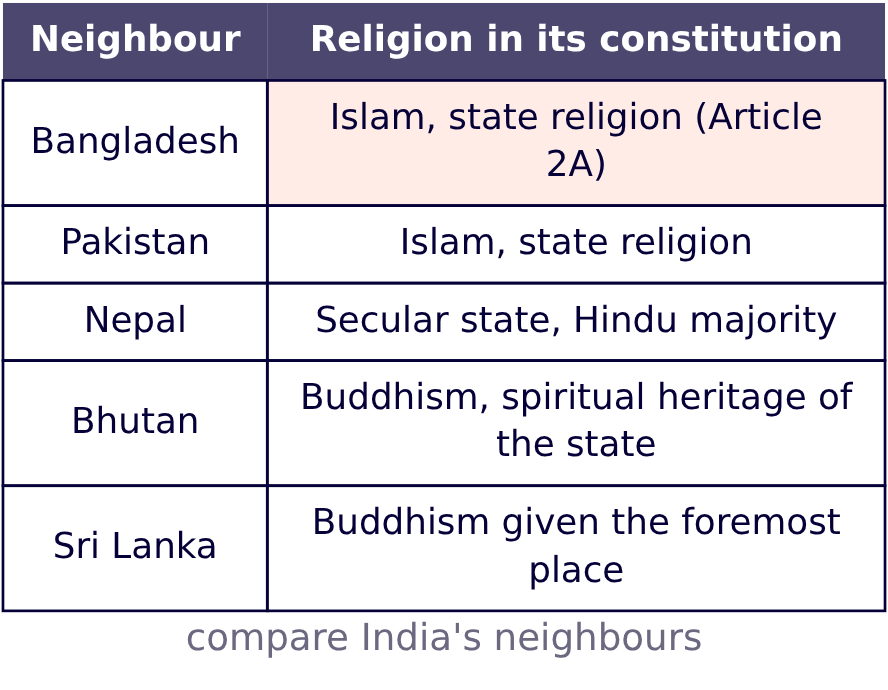 The demography points the same way: about nine in ten Bangladeshis are Muslim, with Hindus the largest minority, so neither Buddhism nor Hinduism nor Christianity could be the state religion.
Hence the correct option is (b).
The demography points the same way: about nine in ten Bangladeshis are Muslim, with Hindus the largest minority, so neither Buddhism nor Hinduism nor Christianity could be the state religion.
Hence the correct option is (b).